Live Chinese Orchid Plant - Cymbidium sinense RiXiang (日向) Bare Root
Live Chinese Orchid Plant - Cymbidium sinense RiXiang (日向) Bare Root
Couldn't load pickup availability
Live Chinese Orchid Plant Details
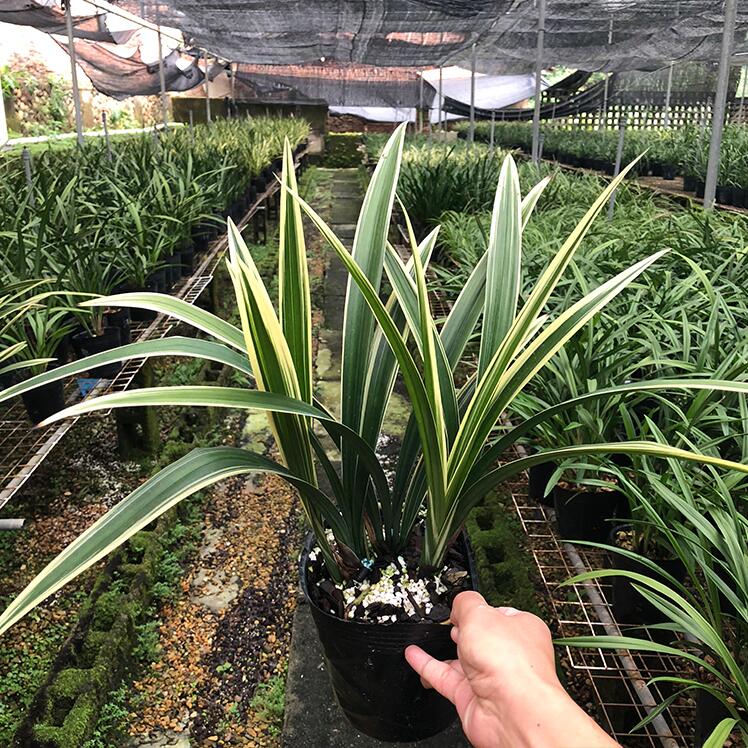
A standout Chinese orchid and one of the undisputed kings of golden-edge leaf-art Jianlan, this Cymbidium sinense RiXiang(日向) is prized for its iris-like pleated leaves and striking ultra-wide, bright golden-yellow margins. The variegation can reach 4–5 mm, stays razor-sharp and stable from new growth to maturity, and even older leaves keep a clear yellow-green edge with almost no reversion—widely regarded as the absolute ceiling of Jianlan variegation.
Flowers are just as impressive: vibrant yellow petals with red blocks, big red tongue spots, classic summer orchid shape, and multi-flower scapes. The blooms have a rich sweet milky fragrance and excellent holding power. Well-grown plants can even bloom twice a year, making it a prized choice for collectors seeking real treasures in the genus.
FAQ
How to care for a Chinese orchid? Provide high filtered light shade, moist rich soil, and consistent moisture with good drainage. Morning sun is often preferred, and brighter conditions can help support stronger growth and flowering.
What does a Chinese orchid look like? This Chinese orchid is prized for its iris-like pleated leaves with bright golden-yellow margins and its small, creamy yellow flowers with red markings and a sweet fragrance.
Do Chinese ground orchids spread? Like many ground orchids, they can form clumps over time in suitable growing conditions, especially when planted in moist rich soil and given steady care.
Is Chinese orchid invasive? Chinese orchids are generally grown as clumping ornamentals rather than aggressive spreaders. In suitable conditions, they may slowly expand, but they are not typically considered invasive.