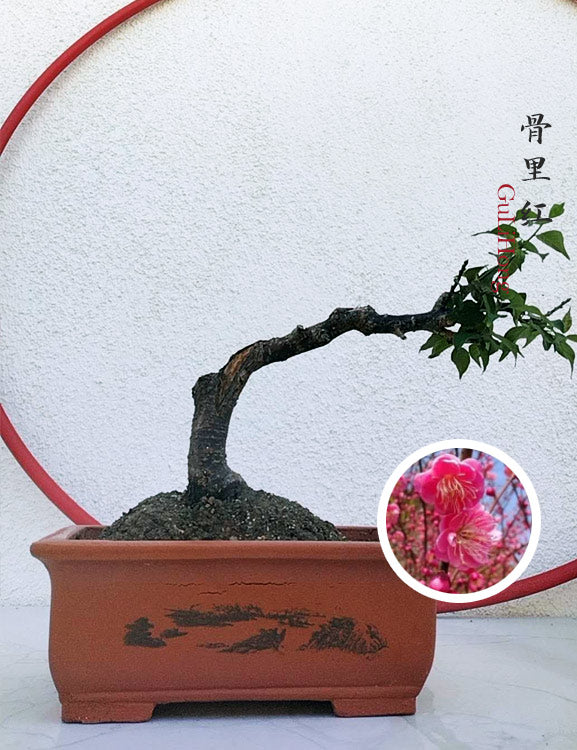
Rare Japanese Apricot Tree ‘GuLiHong’ Bonsai (Prunus mume) with pot – 6+ Year Old
Rare Japanese Apricot Tree ‘GuLiHong’ Bonsai (Prunus mume) with pot – 6+ Year Old
Couldn't load pickup availability
Rare Red Plum Blossom Bonsai for Garden and Landscape Use
Bone-Red Plum Blossom, also known as Guli Hong, is one of the most prized red plum blossom varieties. Famous for its deep crimson petals and elegant branch structure, this cultivar blooms boldly in late winter to early spring, bringing color and fragrance when most plants are still dormant. It is an excellent choice for home gardens, courtyards, bonsai, and landscape projects.
The flowers feature a rich, saturated red that becomes even brighter in cold weather, creating a strong visual impact. With a gentle, classic plum fragrance, Bone-Red Plum Blossom carries the traditional beauty of Chinese ornamental plum culture while offering modern landscape value.
This variety is highly adaptable and cold-hardy to –15°C, making it suitable for both northern and southern regions. It grows vigorously, resists disease, and requires minimal maintenance—ideal for beginners and landscape designers alike. Its natural branching and expressive form also make it a top choice for bonsai training and New Year flowering displays.
NOTE:This Red Plum bonsai has already been planted in a Yixing Zisha bonsai pot using high-quality Akadama soil. It is ready to enjoy as is—after receiving it, simply water it as needed. No repotting is necessary.
FAQ
Where do Japanese apricots grow best? Japanese apricot trees grow best in well-drained soil with full sun to partial shade and good winter chill for early spring bloom.
Is Japanese apricot edible? Yes, Japanese apricot (Prunus mume) fruit is edible and is commonly used fresh or processed into pickled, preserved, boiled, candied, or liqueur products.
How big is a Japanese apricot tree? Japanese apricot trees can vary in size, but this listing is offered as an 8+ year old bonsai suitable for container display.