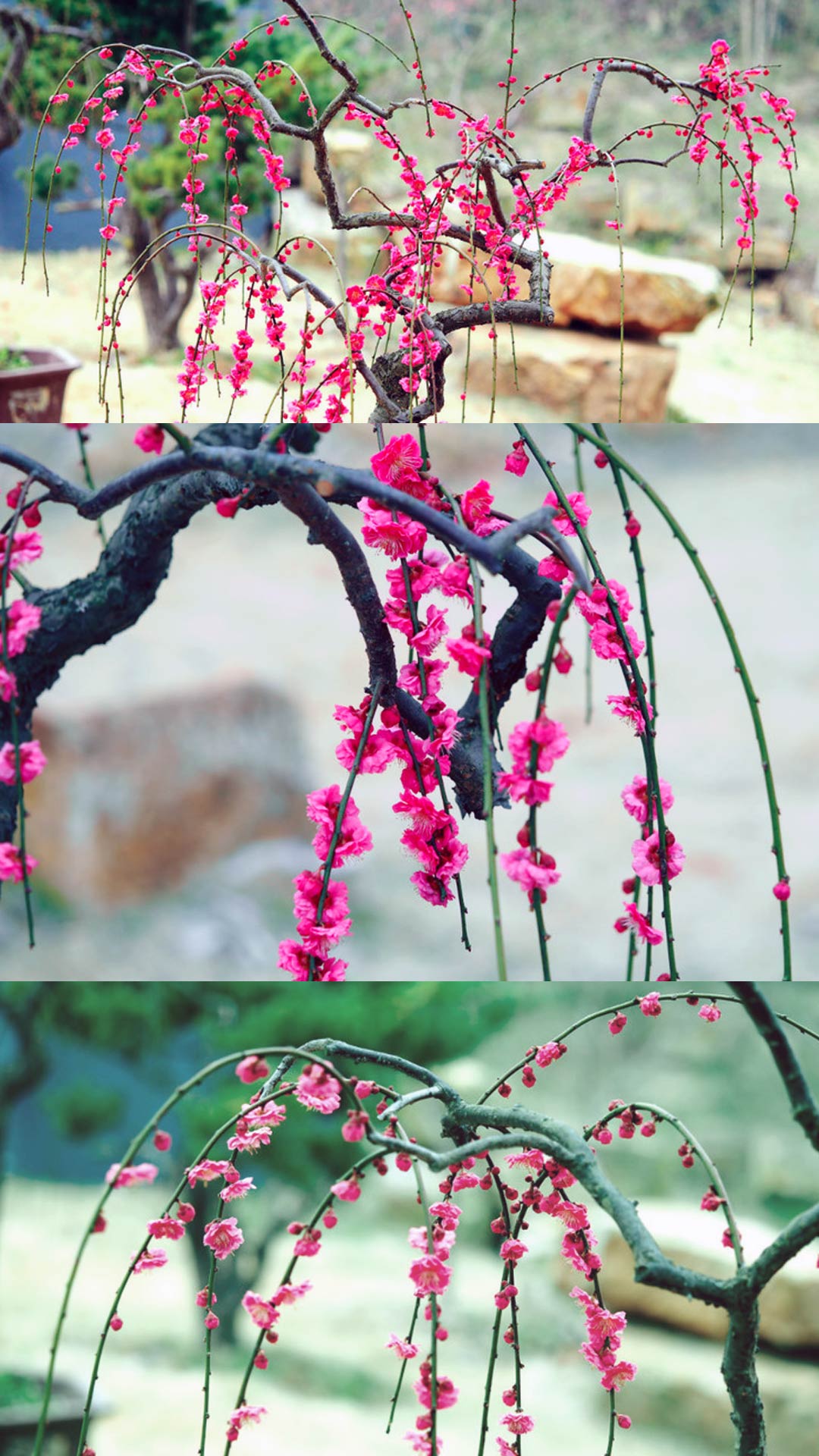
Rare Weeping Japanese Apricot Bonsai (Prunus mume) – 锦红垂枝 10+ Year Old
Rare Weeping Japanese Apricot Bonsai (Prunus mume) – 锦红垂枝 10+ Year Old
Couldn't load pickup availability
Rare Weeping Japanese Apricot Bonsai (Prunus mume) – Jinhong Chuizhi
Jinhong Weeping Plum Blossom (scientific name Prunus mume 'Jinhong Chuizhi'), also known as a classic variety of Japanese Apricot or Ume, is renowned for its elegant weeping plum blossom form and vibrant crimson red flowers, making it a top choice for garden enthusiasts and bonsai collectors. This Japanese apricot bonsai tree features a unique growth habit, with soft, drooping branches flowing smoothly like silk, forming a natural waterfall-like canopy. In winter, the blooming red plum blossom bonsai displays rich colors, layered petals, and a subtle fragrance, delivering an utterly captivating ornamental plum blossom effect.
Compared to ordinary plum blossoms, the Jinhong Weeping Plum Blossom has a longer flowering period, typically lasting from December to March of the following year, thriving even in cold northern regions with cold tolerance down to -15°C. It's highly adaptable, suitable for various soil types including slightly acidic or neutral soils, and easy for home maintenance and transplantation.
As an ideal ornamental plum blossom, the Japanese Apricot Ume not only enhances courtyards, balconies, or indoor spaces but is also widely used in garden landscape design and holiday decorations, such as Spring Festival bonsai arrangements, symbolizing resilience and beauty, and beloved by traditional culture aficionados.
Its seedlings grow rapidly, maturing in 3-5 years with lush foliage that's evergreen year-round—emerald green leaves in summer and golden fruits in autumn and winter, providing visual delight throughout the seasons. Care is simple: just moderate watering, fertilizing (such as phosphorus-potassium fertilizers to promote blooming), and regular pruning to maintain perfect form and prevent pests or diseases. Choosing the Jinhong Weeping Plum Blossom Prunus mume not only invests in a high-quality Japanese apricot bonsai tree seedling but also yields lasting natural beauty and cultural depth, making it an excellent option for elevating your home environment and gardening skills.
Shipped with Protected Root Ball & Soil
To ensure your Japanese Apricot arrives healthy and thrives, we carefully ship it with its original root ball and soil intact. The roots are well-protected with moisture-retaining materials during transit, which minimizes transplant shock and allows for easier establishment in your garden.
FAQ
Can you bonsai an apricot tree?
Yes, apricot and Japanese apricot species can be trained as bonsai or pre-bonsai specimens. This Prunus mume variety is well suited for bonsai styling.
Where do Japanese apricots grow best?
Japanese apricots grow best in well-drained soil and full sun to partial sun conditions. This variety is adaptable and tolerates cold conditions well.
What is the rule of 3 in bonsai?
The rule of 3 is a design guideline used in bonsai styling to create balance and natural-looking structure through varied placement and proportion.
What is the hardest bonsai to grow?
Many bonsai types are considered challenging, but success depends on species choice, climate, and care. This Japanese apricot bonsai is valued for its adaptability and cold tolerance.