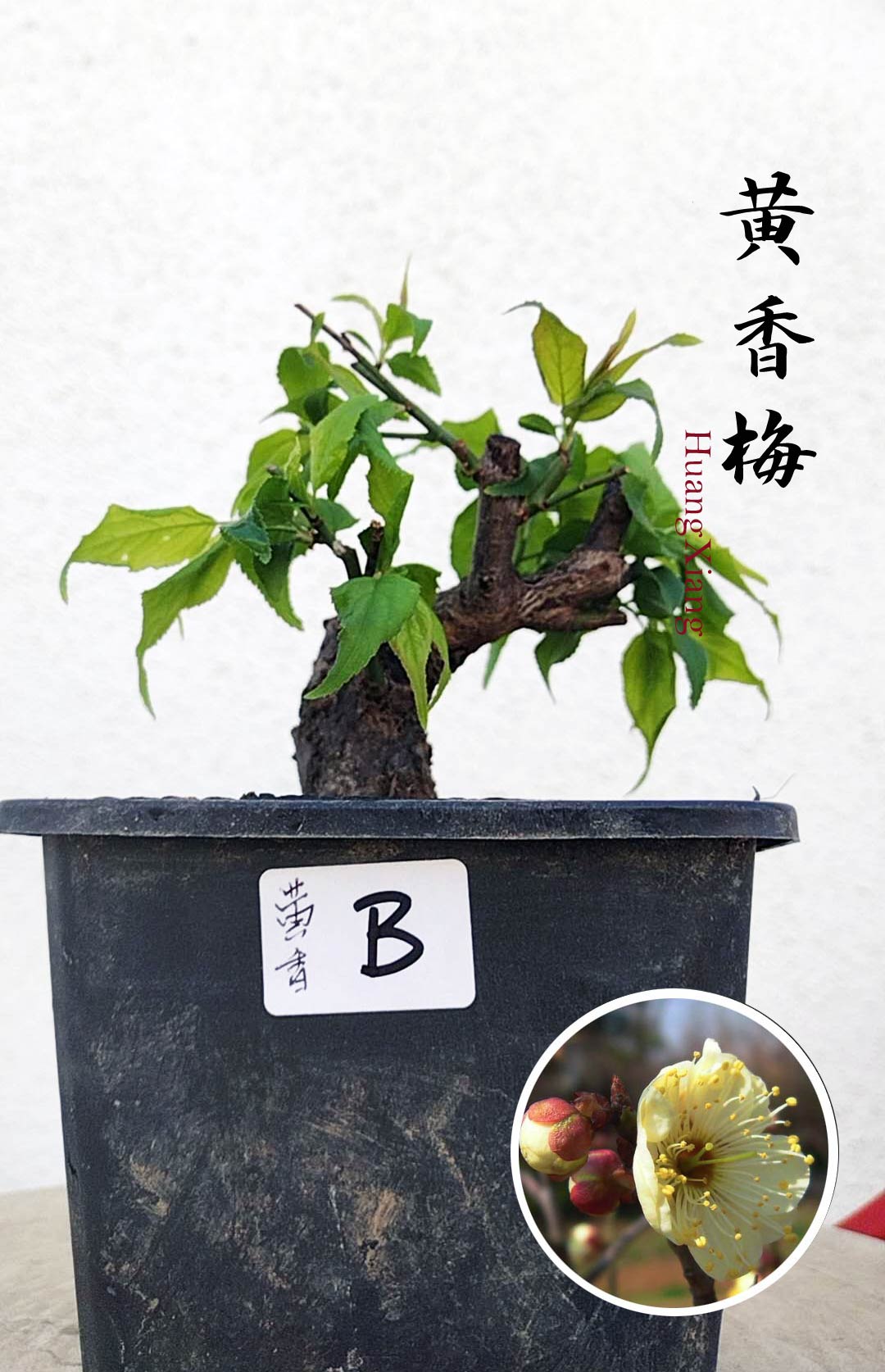
Rare MeiRen HuangXiang Japanese Apricot (Prunus mume) – 5+ Year Old with Pot
Rare MeiRen HuangXiang Japanese Apricot (Prunus mume) – 5+ Year Old with Pot
Couldn't load pickup availability
Bonsai Creation Guidelines
Container Selection: Use shallow pots with drainage holes. Land and water areas should be reasonably divided, and rocks can be incorporated to enhance the landscape's layers.
Plant Selection: Choose dwarf varieties. During planting, ensure proper ventilation and light exposure, and avoid waterlogging.
Maintenance Guidelines
Fertilization: Apply fertilizer 1-2 times per month during the growing season (late May to early August), with an additional application in autumn.
Pruning: Regularly thin out branches and shorten overly long ones. Remove old stems and new buds as needed, adjusting according to the desired shape.
Ornamental Features
Flowering Period: Blooms from winter to early spring (with dense, double pink-purple flowers). Its leaf color and branches can be appreciated year-round.
Cold Hardiness: Can tolerate temperatures as low as -20°C, making it suitable for outdoor placement in northern winters.
Suitable Applications
Home Display: Suitable for balconies and courtyards. During flowering, it emits a delicate fragrance, and its leaves display a unique bright red hue.
Note: All photos are taken of real objects
FAQ
What is a Japanese apricot called?
Japanese apricot is commonly known as Prunus mume. It is also called ume in Japanese.
Where do Japanese apricots grow best?
They grow best in a sunny, well-ventilated location with good drainage and careful watering to avoid waterlogging.
Can you eat Japanese apricots?
Some varieties of Japanese apricot are used for food, but this listing is sold as an ornamental bonsai plant.
Are Japanese apricots used in medicine?
Japanese apricot has traditional cultural and medicinal uses in some regions, but this product is intended for ornamental display.