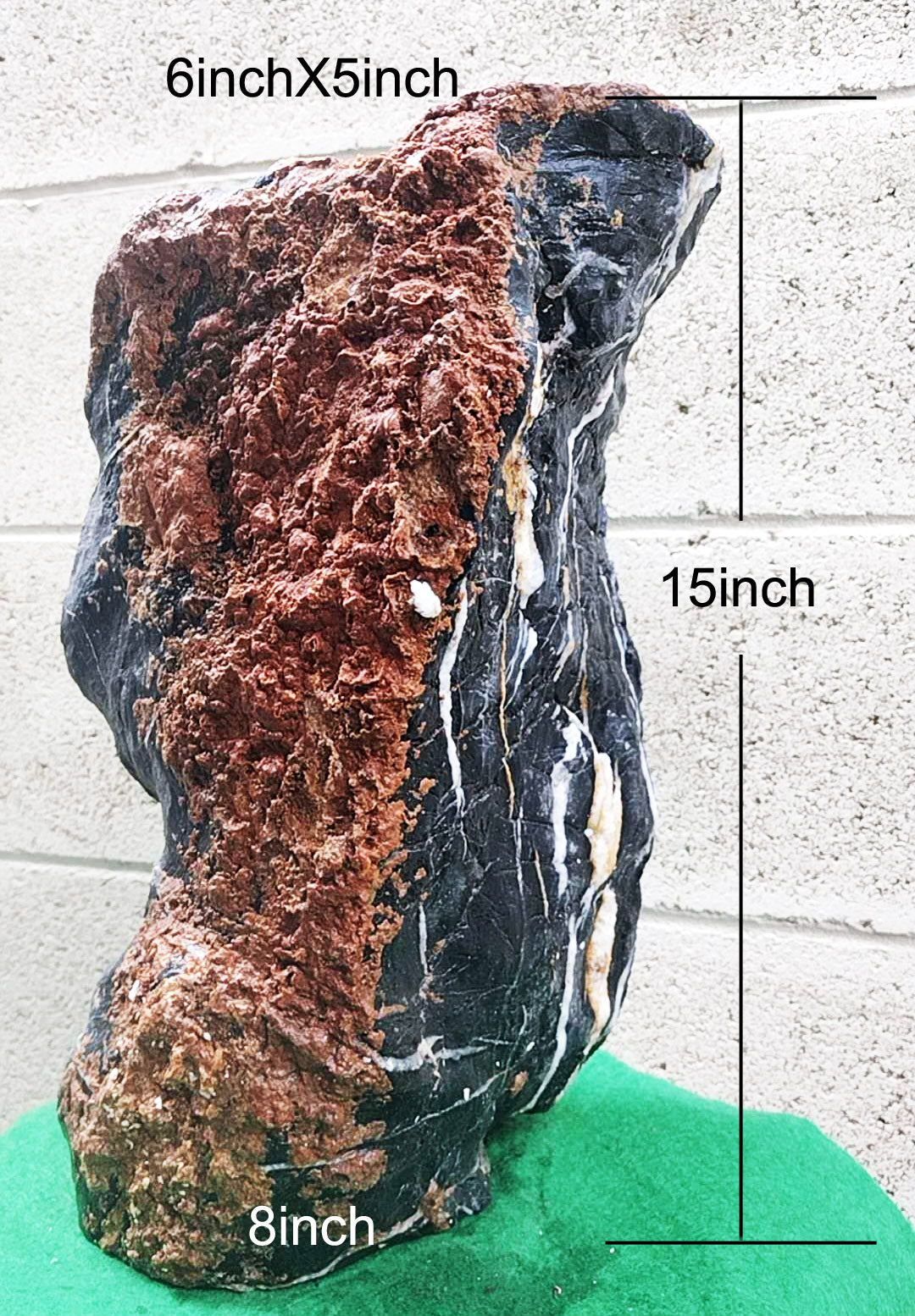
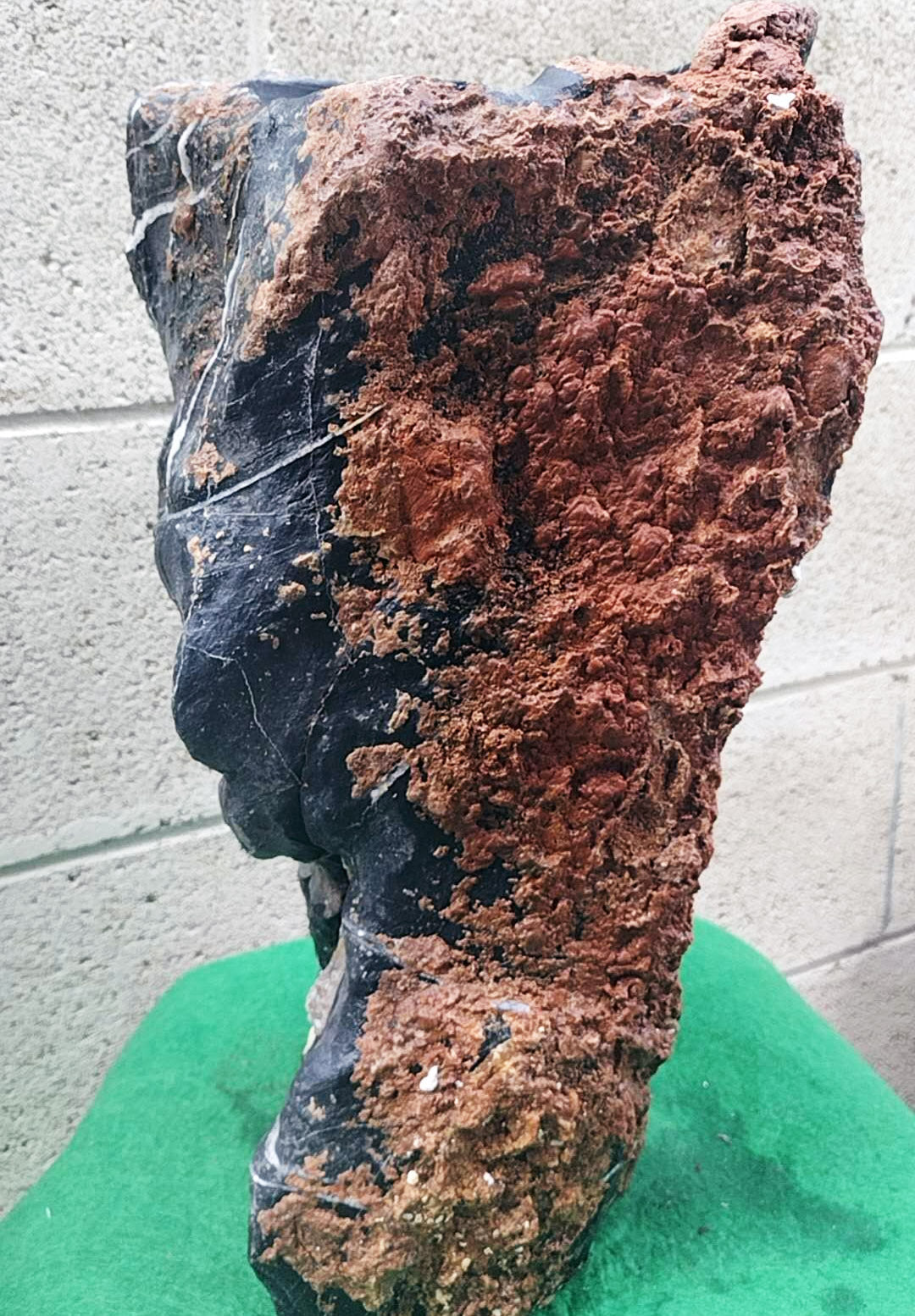
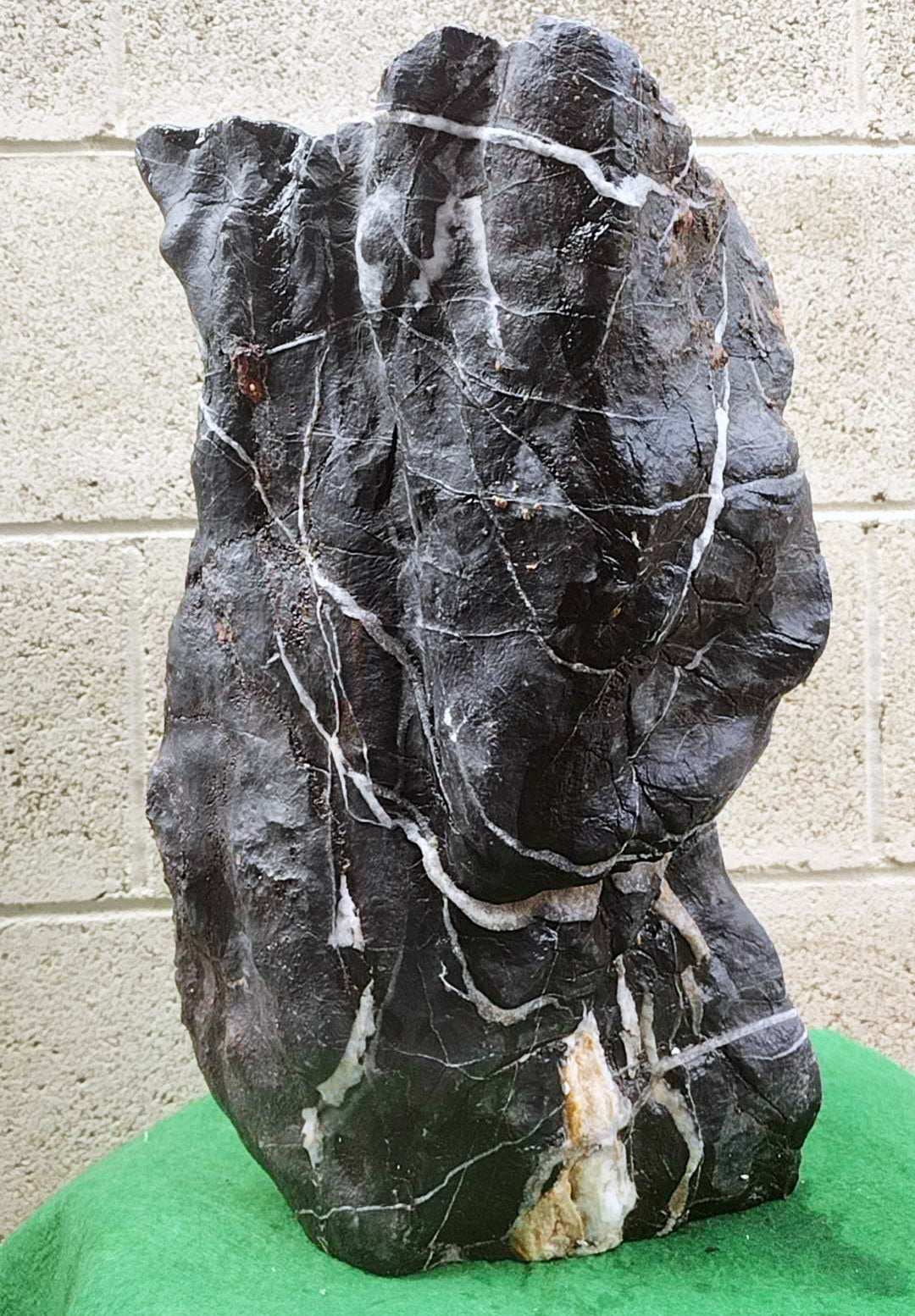
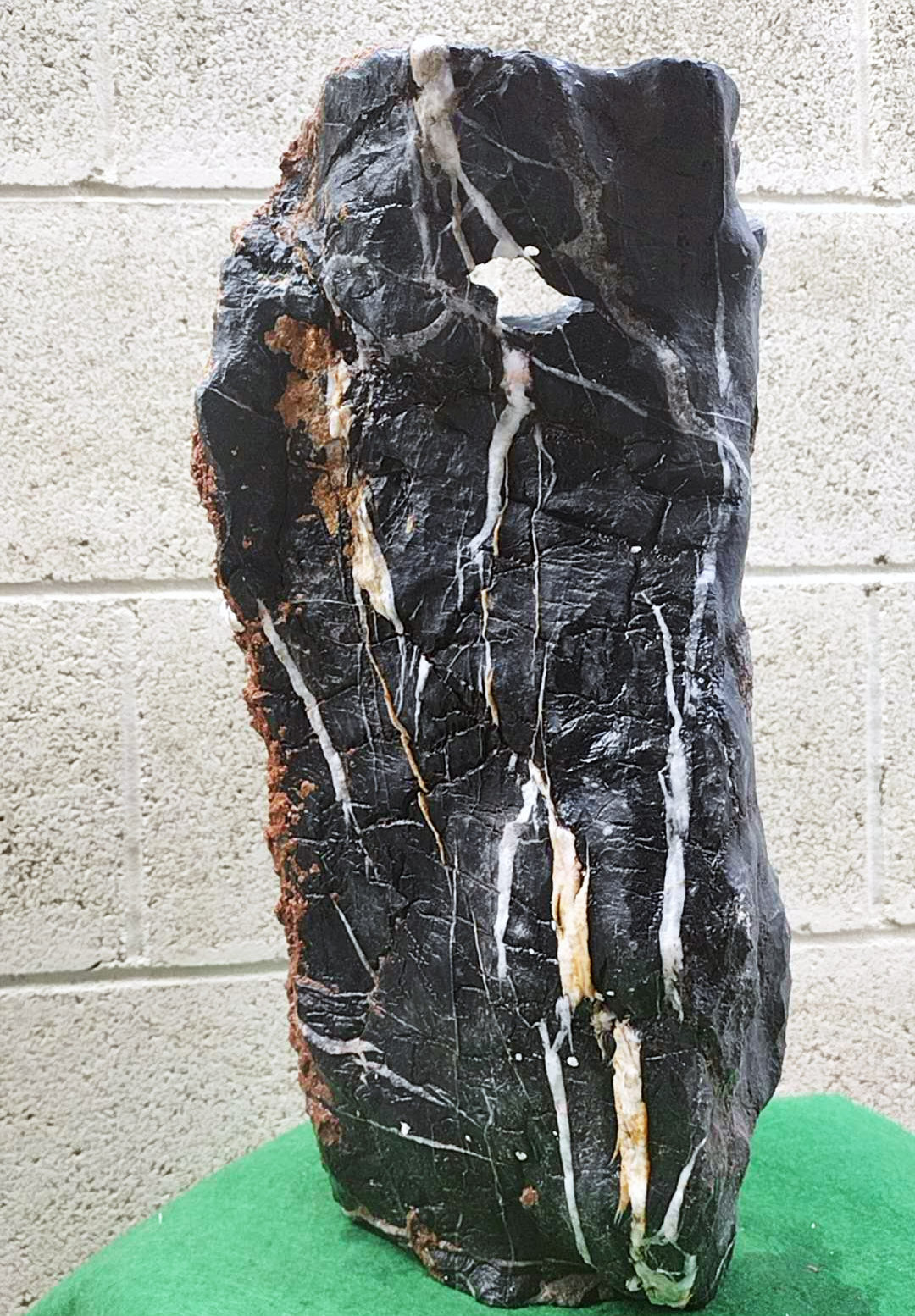
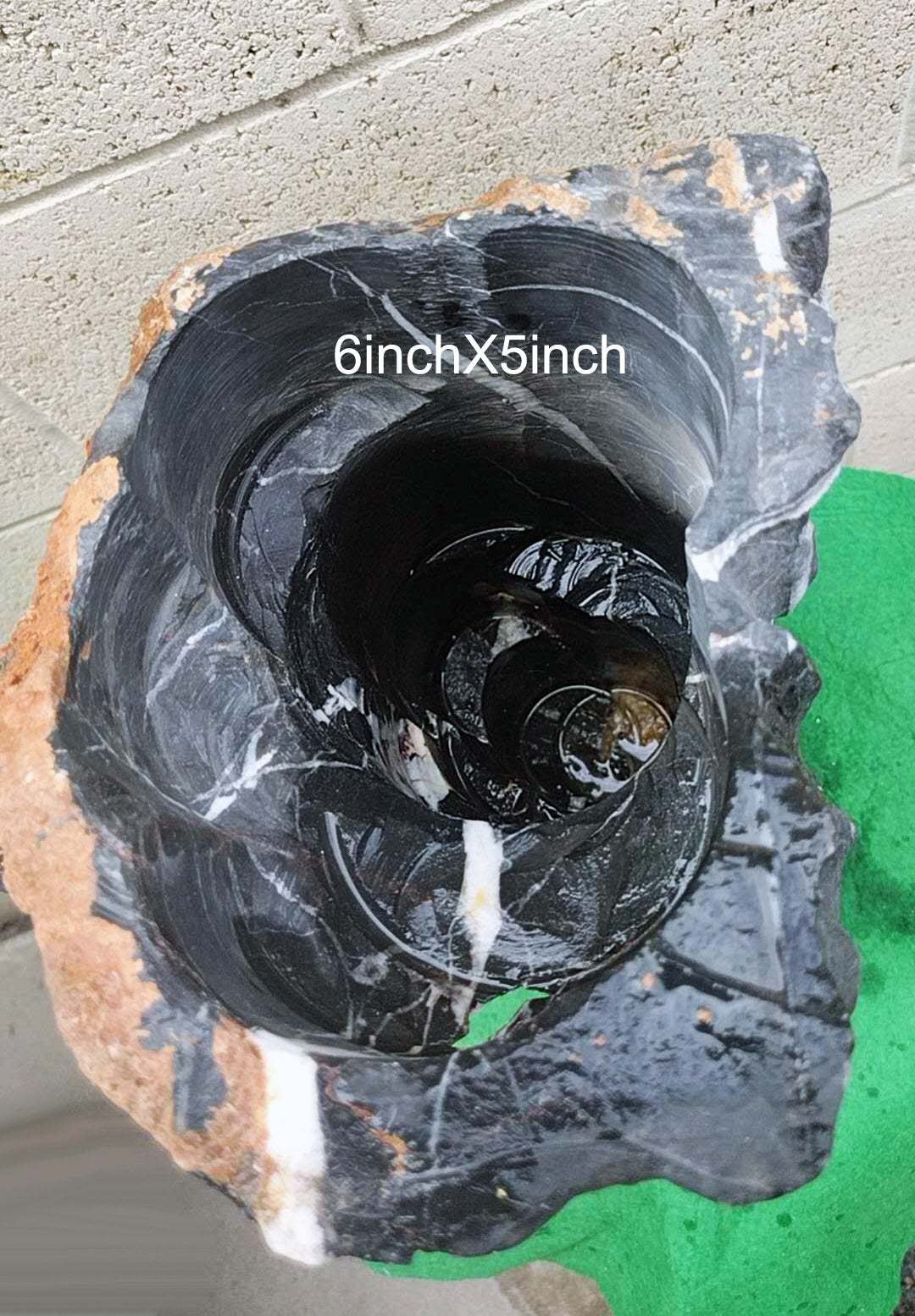
Whole Natural Landscape bonsai Stone Vase China solid natural stone ornament L3
Whole Natural Landscape bonsai Stone Vase China solid natural stone ornament L3
Couldn't load pickup availability
Lingbi stone is categorized by morphology, texture, sound, color, and veining into seven types:
Celestial Indigo Lingbi: Exhibits indigo-black coloration and produces crisp metallic resonance when struck.
Veined Lingbi: Features indigo-black base with irregular linear, arcuate, circular patterns or motifs resembling coins, butterflies, or auspicious clouds.
Anhui Spiral Lingbi: Characterized by spiral protrusions (shell-like formations) in hues of red, yellow, or gray.
Polychrome Lingbi: Displays interbanded colors including yellow, crimson, red, cyan, and ivory within a single specimen.
White Lingbi: Shows partial to dominant calcitic white sections contrasted with indigo or gray zones.
Pictorial Lingbi: Bears gray-black surfaces with dendritic landscapes, figures, or ink-wash-style imagery evoking classical paintings.
Vermilion Lingbi: Possesses monolithic hematite-derived red pigmentation.
Historical Significance
During the Tang and Song dynasties, Lingbi stone was designated a tribute item, honored among China’s Four Great Scholar’s Stones alongside Yingde, Taihu, and Kunshan varieties.
Lingbi Stone Planter Attributes
Material Rarity
Crafted from authentic Zhenzhu-layer Lingbi stone, prized for its cryptocrystalline texture and mineralized veining.
Monumental Presence
Distinguished by exceptional density (2.8-3.0 g/cm³), conveying profound stability ideal for architectural decor.
Lithic Authenticity
Each planter is sculpted from a single boulder through non-invasive abrasion, preserving natural contours and fossil inclusions.
Poetic Essence
Exemplifies the "human-crafted yet heaven-born" philosophy, enhancing spatial harmony through organic forms.
Acoustic-Mineral Excellence
Emits clear-pitch resonance (A440-equivalent) and verifiable via UV-negative fluorescence, ensuring geological authenticity.
Scientific Context
Polychrome variations originate from Permian hydrothermal mineralization (Fe/Mn/Cu oxides). Resonance stems from orthorhombic calcite crystal alignment. Pictorial patterns form through dendritic manganese deposition.